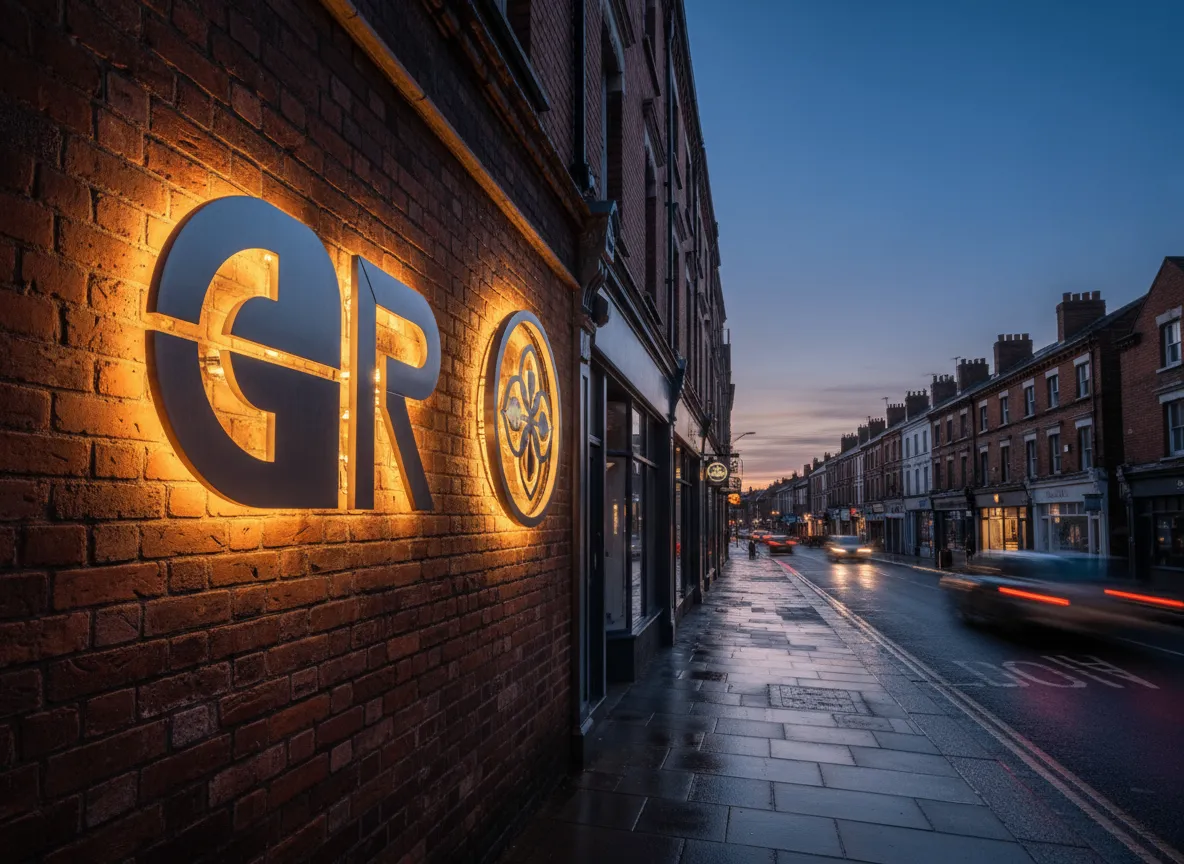
Flat Fascia, Lightbox or 3D Letters?
Most shop signs are one of four types: a flat printed fascia, a lightbox, built-up 3D letters, or halo-lit letters. A flat fascia is the cheapest and suits daytime trade. A lightbox is best if you’re open after dark. 3D letters look the most premium up close. Halo lighting is the top end.
The right choice comes down to four questions: when you trade, how far away people see you from, what your building is like, and your budget. This guide walks through each type, then helps you pick.
The main types compared
| Sign type | Typical price | Lifespan outdoors | At night | Best for |
| Flat printed fascia | £450 to £3,000 | 8 to 10 years | Needs a trough light or spotlights | Shops, trade counters, tight budgets |
| Lightbox | £1,500 to £8,000 | 8 to 10 years for the frame and face | Glows evenly | Takeaways, late shops, restaurants |
| Built-up 3D letters | £1,500 to £15,000 | 8 to 15+ years, by material | Unlit, or face-lit | Salons, clinics, showrooms, offices |
| Halo-lit letters | From around £2,000 | As 3D letters | Soft glow behind each letter | Premium brands, receptions |
| Projecting sign | £250 to £700 | Depends on material | Can be lit | Being seen from along the pavement |
Prices are 2026 ranges from UK sign makers. Size makes most of the difference within each range. Our shop sign cost guide breaks them down.
Flat printed fascia
A flat panel, usually aluminium composite, printed with your name, logo and phone number and fixed across the front of the shop. It’s the most common shop front sign on any high street because it does the job for the least money.
A tray sign is the step up: the aluminium is folded at the edges so the sign has depth and hides the fixings. It looks more finished for a modest extra cost.
Choose it if most of your trade is in daylight, or you’d rather spend on windows and interior.
The catch: it’s flat. From across the road it’s fine. Next to a neighbour with 3D letters, it can look basic up close. You can add a trough light along the top later if you start opening into the evening.
Lightbox
An aluminium frame with an acrylic face and LED modules inside, so the whole sign glows. It’s the classic takeaway and convenience store sign for a simple reason: in December it’s dark by 4pm, and a lit sign is the only thing drivers can read.
Modern LED lightboxes are cheap to run. A typical illuminated fascia uses around £50 to £100 of electricity a year. If the frame is sound, you can often swap just the printed face when you rebrand.
Choose it if you do a lot of trade after dark. See the options on our LED signs page.
The catch: most illuminated signs need advertisement consent from the council, and a full lightbox can be harder to get approved in a conservation area. Read do you need planning permission for a shop sign first.
Built-up 3D letters
Each letter is cut and built individually and fixed so it stands out from the fascia or wall. By day, the shadows give the name depth. They read as more expensive than print, because they are.
The material changes both look and lifespan:
| Material | Look | Lifespan outdoors |
| Acrylic | Clean, bright colours, can match your brand exactly | 8 to 10 years |
| Aluminium | Painted or brushed, light and tough | 10+ years |
| Stainless steel | Brushed or mirror-polished, the most premium | 15+ years |
Choose it if customers judge you on quality: salons, clinics, jewellers, estate agents, offices. Our 3D letter signage page covers finishes and fixings, and acrylic vs aluminium signs goes deeper on the two most common materials.
The catch: each letter is made separately, so a long business name costs noticeably more than a short one.
Halo-lit letters
3D letters with LEDs behind them. The letters sit off the wall and throw light back onto it, so the name shows up in silhouette with a soft glow around each letter. It’s the look you see on hotel entrances and upmarket restaurants.
Choose it if you want lit signage that looks premium rather than bright. It’s also often the better route in a conservation area, because it’s subtler than a lightbox. It still needs consent there, though.
The catch: it’s the most expensive of the four.
Projecting and post-mounted signs
A fascia only works for people facing your shop. A projecting sign sticks out from the wall at a right angle, so people walking along the pavement see it before they reach you. On a long parade of shops, it can do more than a bigger fascia.
If you’re set back from the road or behind a car park, a post-mounted or freestanding outdoor sign board at the entrance tells drivers where to turn.
For receptions, clinics and office doors, acrylic and metal signs do the same job at a smaller scale.
Four questions to help you choose
- When do you trade? If you’re open after 5pm in winter, you need light: a lightbox, halo letters, or a fascia with a trough light.
- How far away do people see you? A rough rule we use is 25mm of letter height for every 3 metres of viewing distance. So 250mm letters read from about 30 metres, and 800mm letters from around 100 metres. If your customers see you from the traffic lights or across a dual carriageway, size matters more than material.
- What’s the building like? A listed building or a conservation area limits what you can put up, especially lit signs. A modern retail unit gives you a free hand.
- What’s the budget, and what’s the plan? If money is tight now, a flat fascia with good window graphics is a sensible start. You can move to 3D letters or lighting when you rebrand, and often reuse the fixing points.
Best sign by business type
| Business | Our usual recommendation | Why |
| Takeaway or late-night shop | Lightbox | Most trade is after dark |
| Restaurant | Lightbox or halo-lit letters | Visible at night, halo if you want it to feel upmarket |
| Salon, barber, boutique | 3D letters, lit if budget allows | Customers judge the look up close |
| Clinic or professional office | Acrylic or metal letters, plus a door plaque | Quality and trust |
| Convenience store | Lightbox fascia plus window vinyl | Long hours, lots to say |
| Trade counter or industrial unit | Flat fascia plus a post sign at the road | Durable, easy to find |
| New business, tight budget | Flat fascia now, upgrade later | Most impact for the money |
Still weighing up the wider options? Types of signage every business should know covers the full list.
Seeing it before you pay
The easiest way to choose is to see each option on your own shop. Send us a photo of your shop front through our contact page or on WhatsApp. We’ll mock the sign up on your actual building and revise it until you’re happy. Design is free with every signage order.
Once you’ve approved it, we make it in our Bordesley Green workshop in 2 to 5 working days, and our own fitters install it. Most single shop fronts are done in a day. Everything we make is on our signage services page.
Frequently asked questions
What is the best type of shop sign?
There isn’t one best type. A lightbox is best if you trade after dark, 3D letters if customers judge you on quality, and a flat fascia if budget matters most.
Are 3D letters better than a flat sign?
They look better up close and last longer in stainless steel, but they cost more. On a busy main road seen from a distance, the difference is smaller than you’d think.
What’s the difference between a lightbox and halo-lit letters?
A lightbox glows across its whole face. Halo-lit letters are lit from behind, so only a soft outline of light shows around each letter.
What is a tray sign?
A flat aluminium sign with folded edges, so it has depth and hides its fixings. It looks more finished than a flat panel.
Can you add lighting to an existing flat sign?
Usually, yes. A trough light or spotlights mounted above the fascia can light a sign you already have.
How big should the letters on my shop sign be?
About 25mm of letter height for every 3 metres of viewing distance. 250mm letters read from about 30 metres.
Do lit shop signs need planning permission?
Most do need advertisement consent, and every lit sign in a conservation area does. See our planning permission guide.