
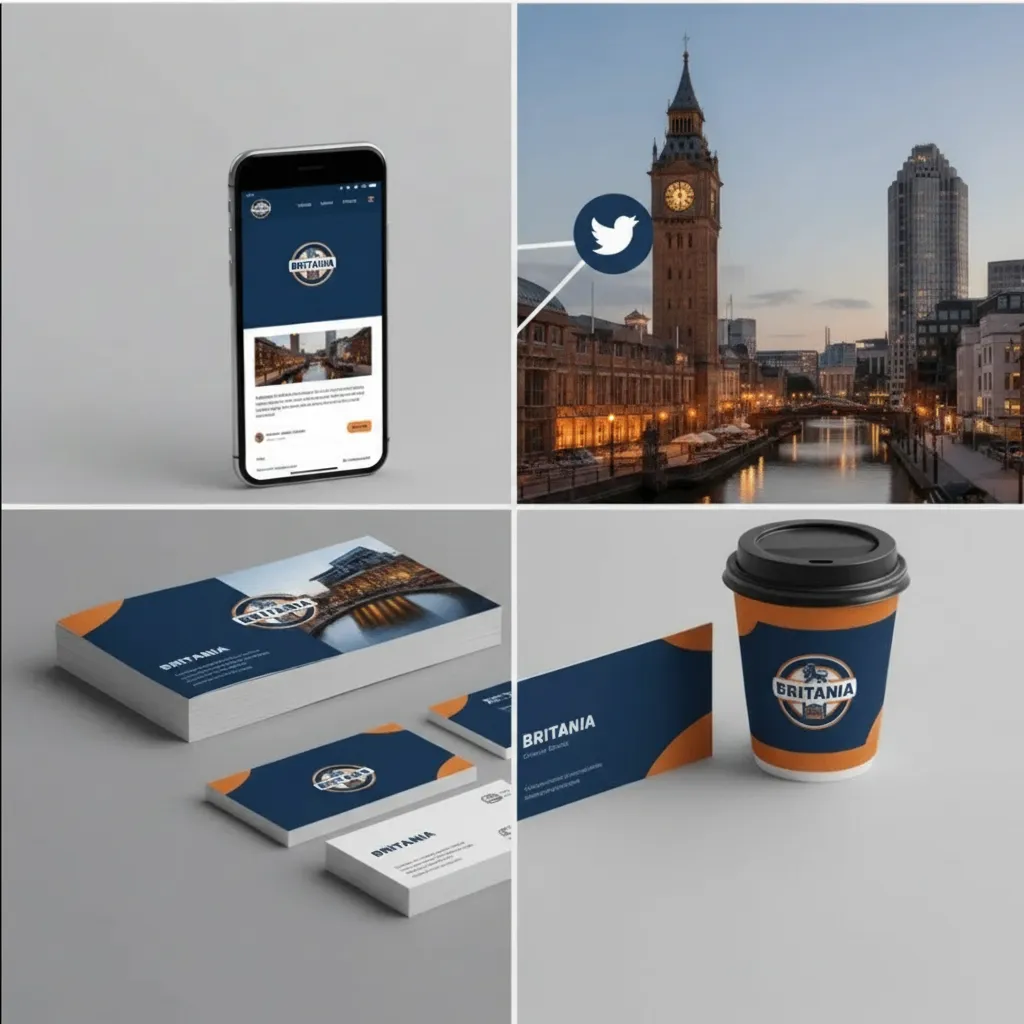
Why Brand Consistency Matters for Local Businesses
Local customers in Birmingham make quick decisions. They often choose businesses that feel familiar and professional. People prefer to buy from companies that appear organised and reliable. Consistent design signals that you pay attention to detail. Inconsistent branding creates confusion and makes a company look less established. When your materials look different every time, people have to re-learn who you are. Consistent branding removes that friction and builds recognition faster.- Builds Trust & Improves Recognition
- People prefer to buy from companies that appear organised and reliable. Consistent design signals that you pay attention to detail. When your website, leaflets, invoices and signage all follow the same style, customers feel more confident. Inconsistent materials can create the opposite effect, even if the quality of your work is high.
- Consistent Branding Improves Recognition
- People are more likely to remember a business they have seen presented in the same way multiple times. Repeated exposure to the same logo, colours and style strengthens memory. This is especially important in competitive local markets. When several companies offer similar services, the one that looks consistent is often the one that feels more established and easier to recall.
- Brand Consistency Supports Your Marketing
- Marketing works harder when every piece of content supports the same identity. A leaflet, social post, banner and website that share the same visual language reinforce each other. Without consistency, each new marketing item starts from zero. With consistency, every new item adds to the recognition you have already built.
Common Branding Problems for Birmingham Businesses
Many local businesses in Birmingham create marketing materials at different times, often with different designers or online tools. Over the years this leads to multiple versions of the logo, mixed colour schemes, and uneven quality across leaflets, business cards, signage and digital content. The result is a brand that feels disconnected rather than professional. Another common issue is using low-quality images, inconsistent fonts, or stretched logos. These small problems may not seem important on their own, but together they weaken the overall impression. Customers may not consciously notice every mistake, yet the business starts to look less organised and less trustworthy compared with competitors who keep their branding consistent. A third frequent problem is the gap between print and digital. A company might have a smart website but poorly designed flyers, or strong social media graphics that do not match the business cards handed out in meetings. When the visual style changes from one channel to another, recognition is lost and the brand feels less established. Many small businesses update only some materials when they rebrand. Old leaflets, vehicle signage or window graphics remain in use alongside the new design. This mix of old and new styles creates confusion and reduces the impact of the updated branding.What Does Consistent Branding Include?
Consistent branding covers more than just a logo. It includes the full set of visual and written elements that appear wherever customers see your business.- Logo – Used in the correct size, colour and spacing on every material
- Colour palette – A limited set of brand colours applied consistently
- Typography – The same fonts used across print and digital designs
- Image style – Similar quality, tone and treatment of photographs or graphics
- Layout approach – A recognisable structure and spacing style
- Tone of voice – Consistent writing style in all customer-facing content
- Application across channels – Matching look and feel on leaflets, business cards, signage, website and social media
Why Consistency Between Print and Digital Matters
Customers rarely stay on one channel. A flyer can lead them to your website. A business card can lead them to your Instagram or Google listing. A van sign can lead them to search for you online. If the print version and the digital version look different, the connection breaks. The customer feels unsure. They may question whether they have found the right business. Consistent design across both print and digital makes the journey feel smooth and professional. It builds trust without the customer even noticing.Why Brand Consistency Matters for Small Birmingham Businesses
Small businesses in Birmingham often compete with larger companies that already have strong visual identities. Consistency helps close that gap. It makes a smaller business look more established and reliable. You do not need a large budget to achieve this. You need clear brand guidelines and the discipline to use them everywhere — leaflets, signage, vehicles, packaging, website, social media and emails. When everything looks and feels the same, customers remember you more easily. They also feel more confident choosing you.What Consistency Looks Like in Practice
| Touchpoint | Consistent Approach | Inconsistent Approach | Result for Customer |
| Flyer / Leaflet | Same logo, colours and fonts as website | Different logo style or colours | Feels professional and joined-up |
| Business Card | Matches website and social media | Completely different look | Customer may not recognise the brand |
| Vehicle Signage | Same colour palette and logo | Different fonts or outdated logo | Missed brand recognition on the road |
| Website | Same colours, logo and tone of voice | Looks nothing like the printed materials | Trust drops |
| Social Media Profiles | Matching profile pictures and colours | Random images and different styles | Brand feels messy |
| Packaging / Bags | Same visual identity | Unrelated design | Opportunity to reinforce brand lost |
How Local Business Can Benefit from Consistent Branding?
- Stronger first impression – Customers see the same look offline and online.
- Higher trust – Consistency signals that the business is organised and professional.
- Better recall – People remember brands that look the same across channels.
- Smoother customer journey – Moving from a leaflet to a website feels natural.
- Competitive edge – Helps smaller Birmingham businesses stand out against bigger competitors.
How to Keep Print and Digital Branding Consistent?
- Create simple brand guidelines (logo rules, colours, fonts and tone of voice).
- Use the same logo files for print and digital.
- Match your colour palette exactly (ask your printer for the correct colour values).
- Keep the same fonts where possible.
- Apply the same style to every new item; leaflets, signs, website updates and social posts.
The Role of Professional Graphic Design in Brand Consistency
Professional graphic design helps create a clear visual system that can be applied across different formats. A good designer will consider how the brand works on both small items like business cards and large items like banners or vehicle graphics. Working with a local design and print partner also makes it easier to keep future materials consistent, because the same team understands your brand rules and can apply them correctly. Businesses that maintain a clear and consistent identity usually find it easier to attract repeat customers and referrals, because people remember them more easily and feel more confident recommending them.Frequently Asked Questions
Brand consistency means using the same visual style, colours, fonts and messaging across all your business materials so customers always recognise you.
It builds trust, improves recognition and makes your marketing more effective by presenting a professional and unified image.
Yes. Small businesses often benefit the most because consistency helps them appear more established and memorable in local markets.
Review your current materials, define simple rules for logo, colours and fonts, and apply those rules to every new design.
Yes. A professional designer can create a clear visual system and help apply it across print and digital materials.
