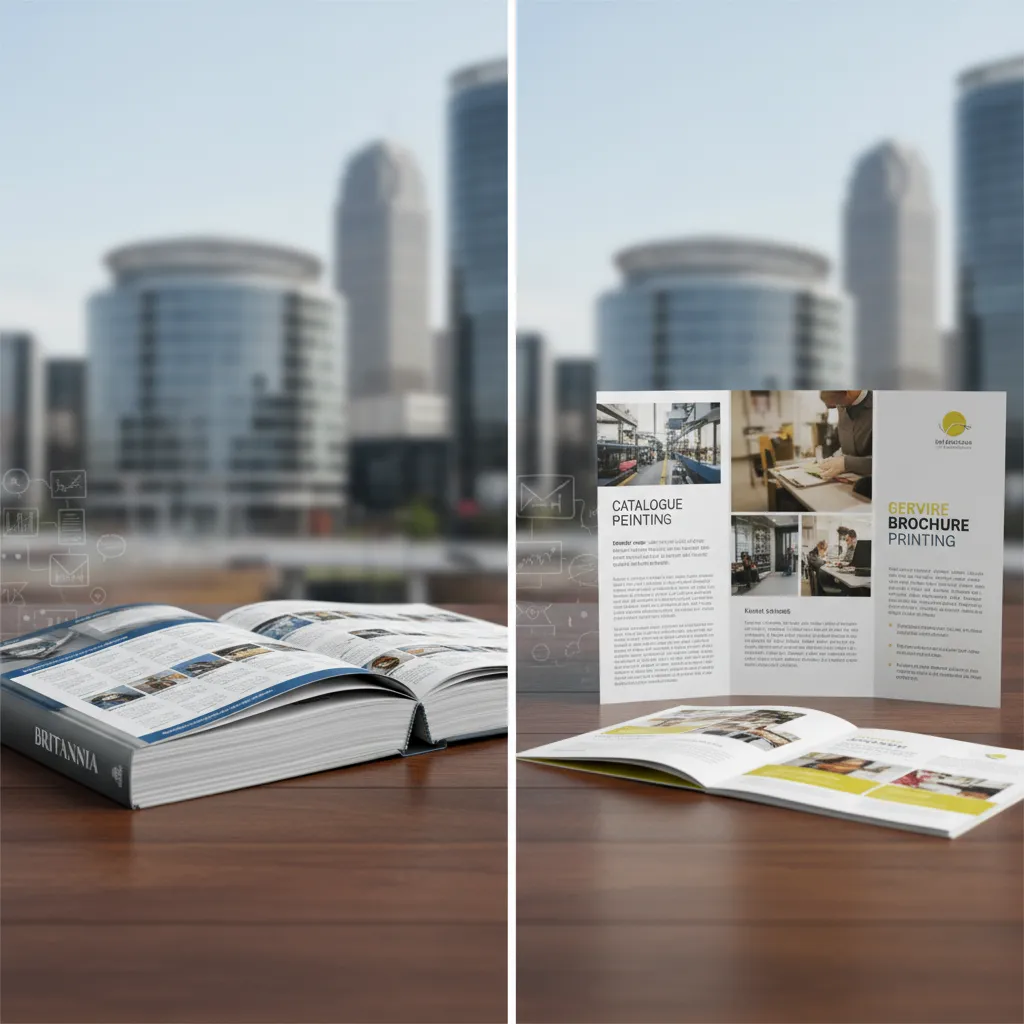
Quick Recommendation
- Choose a brochure if your business mainly sells services or needs to make a strong first impression.
- Choose a catalogue if you sell a wide range of products and customers need to browse and compare options.
| Feature | Brochure | Catalogue |
| Main Purpose | Introduce the business and explain services | Present a wide range of products in detail |
| Focus | Builds trust and interest | Helps customers compare and choose products |
| Typical Length | 4 – 16 pages | 16+ pages (often much longer) |
| Best For | Service-based businesses | Product-based businesses |
| Content Style | Persuasive and benefit-led | Informative and detailed |
| Includes | Company overview, services, testimonials, CTA | Product images, descriptions, codes, prices, categories |
| Ideal Industries | Professional services, property, healthcare, hospitality | Retail, wholesale, manufacturing, fashion |
| Customer Goal | Encourage enquiry or meeting | Help customer select and order products |
| Design Approach | Clean, branded, easy to read | Organised, image-heavy, easy to navigate |
| Print Frequency | Updated less often | Updated more often (especially with price/range changes) |
| Cost Consideration | Usually lower cost due to fewer pages | Higher cost due to more pages and images |
| Best Use Case in Birmingham | Explaining services and building credibility | Showcasing large product ranges to local or trade customers |
What Is the Difference Between a Catalogue and a Brochure?
A brochure and a catalogue are both multi-page printed documents, but they are not the same thing. The main difference lies in their purpose and the amount of detail they contain. A brochure is designed to introduce a business or explain its services. A catalogue is designed to present a wide range of products in detail so customers can browse and choose.
What Is a Business Brochure?
A business brochure is a short printed document, usually between 4 and 16 pages. Its job is to create interest, explain what the company does, and encourage the reader to take the next step. Brochures are commonly used by service-based businesses, professional firms and companies that want to make a strong first impression.
What Is a Product Catalogue?
A product catalogue is a longer document that lists products with images, descriptions, codes and often prices. Customers use it to compare options and decide what to buy. Catalogues are most useful for retailers, wholesalers, manufacturers and any business that sells a wide range of items.
How Brochures and Catalogues Serve Different Purposes?
A brochure sells the business itself. It answers questions such as who you are, what you offer and why someone should choose you. A catalogue sells the products. It answers questions about specifications, options, pricing and availability. One focuses on persuasion. The other focuses on selection.
What Is a Brochure Used for in Business Marketing?
Brochures are used to introduce a company, explain services and build trust. They work well in meetings, at exhibitions, in welcome packs and as leave-behind materials after sales conversations. Because they are physical, people often keep them for longer than a digital link. This makes them useful for businesses where decisions take time.
Using Brochures to Introduce Your Company
A company brochure gives a clear overview of who you are and what makes your business different. It is especially useful when meeting new clients or attending networking events. A good introduction section sets the tone and helps the reader understand your values and experience quickly.
Using Brochures to Explain Services
Service businesses use brochures to explain what is included, how the process works and what results customers can expect. This reduces confusion and shortens sales conversations. Clear service descriptions also help the brochure work as a silent salesperson when you are not in the room.
Using Brochures to Build Customer Trust
Professional design, clear writing and real testimonials help a brochure feel credible. This is particularly important for higher-value services where trust influences the decision. A well-produced brochure signals that the business pays attention to quality in everything it does.
What Is a Catalogue Used For in Business?
Catalogues are used to present products in an organised way so customers can browse, compare and select. They are especially valuable when a business has a wide range of items. A printed catalogue remains useful even when customers also buy online. Many people still prefer to look through a physical document when making purchasing decisions.
Why Product-Based Businesses Need Catalogues
If you sell many products, a catalogue helps customers see the full range in one place. It reduces the need for long explanations during sales meetings. Trade customers in particular often keep catalogues on file and refer to them when placing repeat orders.
How Catalogues Help Customers Compare Products
Side-by-side product details, images and specifications make it easier for customers to choose the right item. Good organisation saves time for both the buyer and the seller. Clear categories and consistent layouts improve the customer experience and reduce ordering errors.
Catalogue vs Brochure: Which One Is Better for Birmingham Businesses?
The better choice depends on what you sell and how your customers make decisions. There is no single answer that suits every business. Service businesses usually need brochures. Product-based businesses with wide ranges usually need catalogues. Some companies benefit from using both at different stages.
Best Choice for Retail Businesses
Retailers with large product ranges generally need catalogues. Smaller shops that promote a lifestyle or service may find a brochure more effective. The decision should be based on how many items you need to show and how much detail customers require before buying.
Best Choice for Manufacturers and Suppliers
Manufacturers and wholesalers almost always benefit from catalogues. Detailed product information supports trade sales and helps distributors sell on your behalf. A well-structured catalogue can remain in use for many months and become a core sales tool.
Best Choice for Service Businesses
Service businesses such as consultants, agencies, trades and professional firms usually get better results from brochures. Their main goal is to explain expertise and build confidence rather than list dozens of individual products.
Best Choice for Property and Construction Companies
Estate agents and construction firms often use brochures for developments, services and company presentation. Catalogues are less common unless the business also sells products. High-quality print helps property and construction companies present a professional and trustworthy image.
H2: What Should Be Included in a Professional Business Brochure?
A strong business brochure should be easy to understand and focused on the reader’s needs. It does not need to include everything the company does. The most effective brochures cover a clear introduction, the main services or products, social proof and a direct call to action.
Company Introduction
A short section that explains who you are and what makes your business different. Keep it concise and relevant to the reader. Avoid long company histories unless they directly support credibility.
Services and Product Information
Describe the main services or products you want to promote. Focus on benefits as well as features so the reader understands the value. Clear structure and short paragraphs make the information easier to absorb.
Customer Reviews and Testimonials
Real feedback from customers helps build trust quickly. Short, specific testimonials work better than generic praise. Including a name and, where appropriate, a company name increases credibility.
Contact Information and Call To Action
Make it easy for the reader to take the next step. Include phone, email, website and a clear request such as “Call us for a free consultation”. Place contact details where they are easy to find, usually on the back page or near the end of the brochure.
Frequently Asked Questions
Brochure printing delivers the strongest results for businesses that need to explain services, build credibility and leave a lasting impression.
Local professional services, property firms, hospitality businesses and healthcare providers are among the most consistent users of brochures in Birmingham.
Product catalogue printing is most valuable for businesses that sell a wide range of items and need customers to browse and select from many options.
Retailers, wholesalers, manufacturers and fashion brands are the main users. Any business that relies on product specification and comparison will usually benefit from a catalogue.
A good product catalogue is organised, easy to navigate and visually consistent. Customers should be able to find what they need without frustration.
The essential elements are product images, clear descriptions, pricing where appropriate, logical categories and ordering information.
A4 is the most common and versatile size for business brochures. It gives enough space for text and images while still feeling professional.
A5 is more compact and cost-effective for shorter brochures or handouts. Square formats and DL sizes are useful for distinctive or mail-friendly designs. .
The fold you choose affects both the look of the brochure and how much content you can include. Simple folds are easier to produce and usually more practical for everyday business use.
Bi-fold and tri-fold are the most popular options. Gate fold and Z-fold create more visual interest but are less common for standard business documents.
Gloss paper makes product images look bright and sharp, which is why it is popular for catalogues and retail brochures. Matt paper feels more sophisticated and is easier to read in longer documents.
Premium finishes such as soft-touch lamination add a high-quality feel and are often chosen by brands that want to stand out.
Brochure printing costs depend on page count, size, paper weight, binding method and quantity. Higher quantities reduce the cost per copy.Special finishes such as lamination or foiling increase the price but can improve the perceived value of the finished brochure. Most printers provide clear quotes once the specification is known
People judge a business partly by the quality of its printed materials. A clean, well-designed brochure creates a stronger first impression and makes the company appear more established.Good design also helps customers understand the offer more quickly and feel confident about taking the next step.
Local printers in Birmingham offer brochure and catalogue printing with fast turnaround and practical advice. Choosing a local supplier makes communication easier and delivery quicker.Many printers also provide design support, which is useful if you need both creative work and print production handled in one place.
Final Advice
Choose a brochure when you want to introduce your business or explain services. Choose a catalogue when you need to present a wide range of products in detail. Many Birmingham businesses use both successfully. A brochure opens the conversation. A catalogue helps the customer decide what to buy. Clear writing and professional print quality matter more than any single design trend.Need brochure or catalogue printing in Birmingham?
Britannia Design & Print offers professional brochure and catalogue printing with fast local turnaround. We can advise on size, paper, folds and finishes. Contact us for a clear quote.
