How Often Should You Update Your Business Branding?
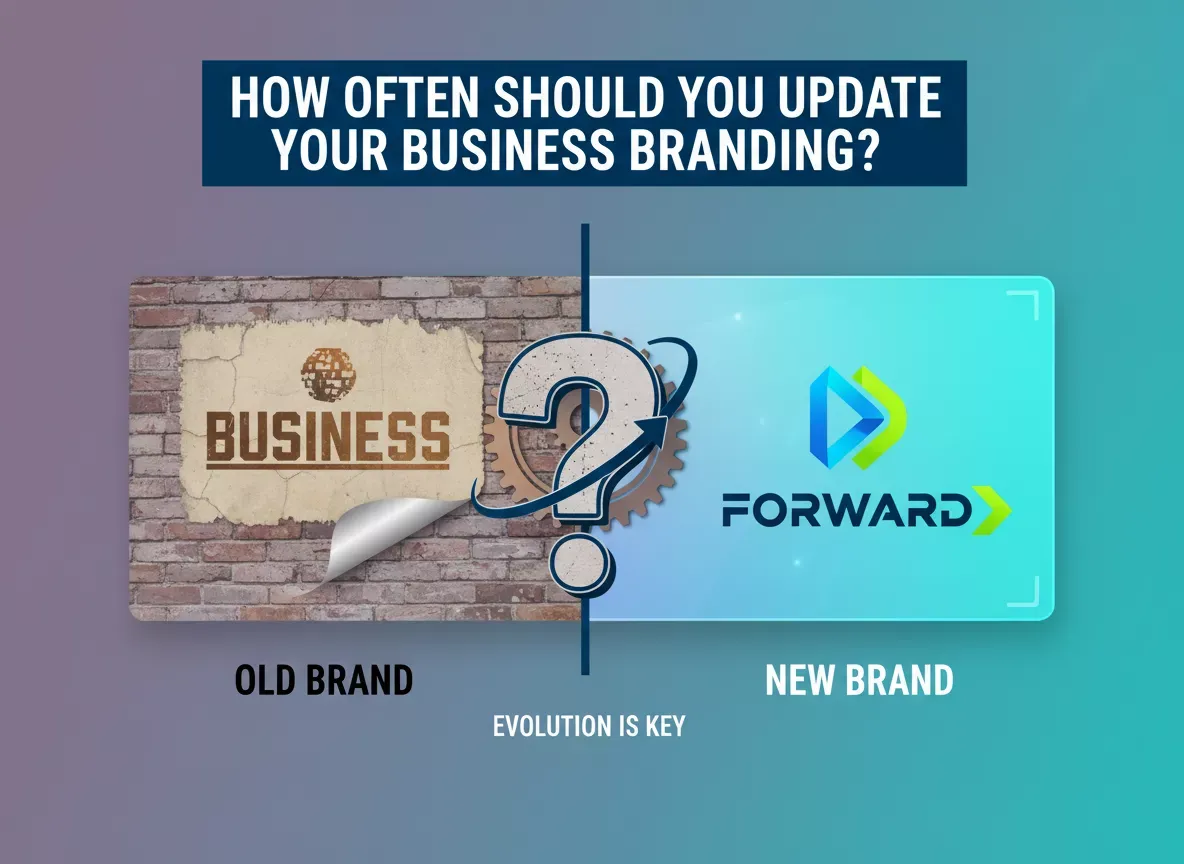
There’s no fixed calendar for rebranding, no rule that says every five years you tear up your logo and start again. But there is a pattern most businesses follow: a light brand refresh every 2 to 3 years to stay current, and a fuller rebrand every 7 to 10 years, or whenever the business itself has genuinely changed.
The mistake we see most often at Britannia Design & Print isn’t rebranding too rarely. It’s businesses holding onto branding that stopped representing them years ago, because nobody wants to disrupt something that “still works fine.”
Brand Refresh vs Full Rebrand
These get used interchangeably, but they’re different jobs. A brand refresh keeps your core identity, your name, your logo’s basic shape, your brand colours, and modernises the details: cleaner typography, updated colour tones, refreshed photography, tidier social media templates. Customers barely notice a refresh happening. That’s the point.
A full rebrand goes further: a new logo, a new name in some cases, a different visual identity altogether. This is a bigger, riskier move, usually triggered by something structural rather than a general sense that things look dated.
Most businesses need a refresh far more often than they need a full rebrand.
Signs Your Branding Needs Updating
A few reliable signals that it’s time, regardless of how long it’s been:
- Your logo still looks fine on a business card but breaks apart or pixelates on a website favicon, app icon, or social profile picture.
- Your visual identity was built before you needed a strong presence on Instagram, TikTok, or a modern responsive website, and it doesn’t translate well to any of them.
- You’ve expanded into new services or a new market that your original branding doesn’t represent.
- A competitor with weaker branding is winning customers who should be choosing you on service alone.
- Staff or customers describe the brand as “dated” or “generic” without being prompted.
Any one of these on its own isn’t necessarily urgent. Two or three together usually means it’s worth having the conversation.
Does Rebranding Actually Improve Sales?
It can, but not automatically, and not by itself. Branding influences first impressions, trust, and how memorable a business is against competitors, all of which affect conversion rates over time. What a rebrand doesn’t do is fix a weak product, poor service, or a broken sales process. It’s a multiplier on what’s already working, not a replacement for it.
The businesses that see a real lift after rebranding are usually the ones where the old branding was actively working against them: confusing customers about what the business does, looking less credible than smaller competitors, or simply failing to show up properly online.
How Often Is Too Often?
Rebranding every year or two, chasing every design trend, does more harm than good. It confuses returning customers, dilutes brand recognition, and signals instability rather than growth. Consistency builds trust. A logo customers recognise instantly, even if it’s a few years old, is doing its job.
The businesses with the strongest brand recognition, from local Birmingham favourites to national names, tend to make small, careful updates over time rather than dramatic overhauls. Think evolution, not reinvention, unless there’s a genuine business reason for the bigger change.
What a Brand Refresh Usually Involves
A typical refresh for a small or medium Birmingham business covers: an updated or cleaned-up logo, a refined colour palette, consistent typography across print and digital, refreshed templates for social media and email, and updated brand guidelines so everything stays consistent going forward.
None of this needs to happen all at once. Many businesses phase it in over a few months, starting with whatever’s most customer-facing, usually the website and signage, before moving on to internal documents and stationery.
Frequently Asked Questions
How often should you update your business branding?
Most businesses benefit from a light refresh every 2 to 3 years, updating colours, fonts, and templates. A full rebrand is usually only needed every 7 to 10 years, or when the business itself has changed significantly, such as a new service offering or market.
When should you rebrand your business?
Rebrand when your current identity no longer reflects what your business does, when you’ve outgrown your original market, or when your visual identity actively looks worse than competitors. A rebrand driven by a real business change tends to work better than one driven by boredom.
How do you know when your business needs rebranding?
Common signs include a logo that doesn’t work well on modern platforms, customers describing your brand as dated, expansion into services your branding doesn’t reflect, and weaker competitors winning business on presentation alone. Two or three of these together usually means it’s time.
How often should you redesign your logo?
A logo rarely needs a full redesign more than once every 7 to 10 years. Small refinements, like updated colours or cleaner typography, can happen more often, every 2 to 3 years, without losing the recognition your original logo has built with customers.
What are the signs your branding is outdated?
Outdated branding typically shows up as poor performance on modern platforms, inconsistent use across print and digital, a logo that doesn’t scale well to icons or profile pictures, and a general mismatch between how the business looks and what it actually offers now.
Does rebranding improve sales?
It can, particularly if the old branding was actively hurting trust or clarity. Rebranding works as a multiplier on a business that’s already delivering, not a fix for weak service or product issues. Expect improved perception and consistency rather than an automatic sales jump.
Ready for a Brand Refresh?
Britannia Design & Print has been helping Birmingham businesses with branding, graphic design, and marketing for more than 20 years. Whether you need a light refresh or a full rebrand, from logo to signage to social templates, we can help you plan an update that builds on what customers already recognise rather than starting from scratch. Get in touch to talk through you