Acrylic vs Aluminium Signs: Which Is Better for Birmingham Businesses?
If you’re weighing up acrylic signs in Birmingham against aluminium signs Birmingham businesses tend to reach for outdoors, the honest answer is: it depends on where the sign is going and how long you need it to last. Both materials do a good job. They just do different jobs.
We get asked this question most weeks at Britannia Design & Print, usually by a shop owner trying to work out whether their new signage needs to survive Birmingham weather or just look sharp above a reception desk. Here’s what actually separates the two.
What Acrylic Signs Are Good At
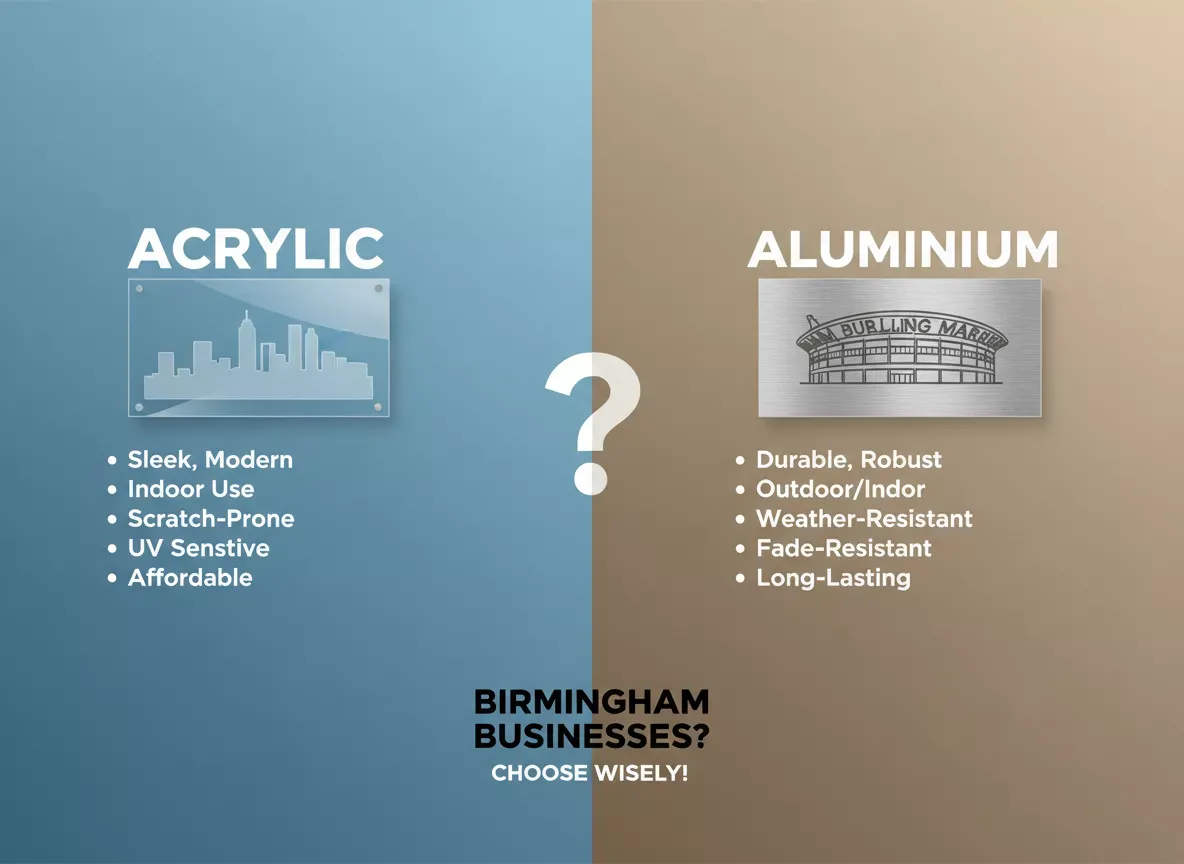
Acrylic signage is a plastic sheet material, usually 3mm to 10mm thick, that can be printed, cut into custom shapes, back-lit, or mounted with standoffs for a raised, 3D look. It has a glossy, premium finish that catches light well, which is why you see it a lot in office signage, reception areas, menu boards, and indoor shop front signs.
Custom acrylic signs cut cleanly into logos, letters, and irregular shapes, so if your brand mark isn’t a rectangle, acrylic gives you more freedom than sheet metal. It’s also lighter, which matters for wall-mounted indoor signs where you don’t want to be drilling into plasterboard with heavy fixings.
The trade-off: standard acrylic can go brittle and yellow with long-term sun exposure, and it’s more prone to cracking on impact than aluminium. UV-resistant acrylic grades exist and hold up better outdoors, but for anything facing direct weather for years, most sign makers in Birmingham will still point you towards metal.
What Aluminium Signs Are Good At
Aluminium shop signs are built for the outdoors. The metal doesn’t rust, it shrugs off rain, wind, and UV without warping, and it takes a hard knock better than acrylic does. That’s why you’ll see it on fascia signs, freestanding outdoor signs, van livery backing boards, and anything bolted to a wall facing Birmingham’s mix of rain and grit.
It’s usually printed with a digitally printed vinyl or directly UV-printed graphic, then laminated for extra protection. Composite aluminium panels, thin aluminium bonded either side of a plastic core, are also lightweight enough for large fascia boards without needing scaffolding-grade brackets.
The trade-off: aluminium doesn’t do fine detail cutting or backlighting the way acrylic does, and unfinished or poorly coated edges can eventually corrode where the metal is cut. A good sign maker seals the edges properly, so this is more of a quality-control issue than a material flaw.
Durability and Weather Resistance
This is where the decision usually gets made. Outdoor signage in Birmingham has to deal with year-round rain, occasional hard frost, and enough UV in summer to fade cheap materials within a couple of years.
Aluminium is the more weather-resistant signage option for anything permanently outside. Properly coated, it can last 10 years or more without significant fading or warping. Acrylic can be used outdoors, and UV-resistant acrylic signage holds its colour reasonably well, but it’s better suited to sheltered spots, like under a shop awning, rather than a fully exposed wall.
Indoors, this whole question disappears. There’s no UV degradation or rain to plan for, so acrylic’s better looks usually win.
Cost
Acrylic signs are generally cheaper for small to mid-sized indoor pieces. Aluminium composite panels cost more per square metre but need replacing far less often outdoors, so the lifetime cost often evens out, or favours aluminium, once you factor in five or six years of use.
Which One Fits Your Business?
- Shop front facing the street, exposed to weather: aluminium.
- Reception area, office signage, or an indoor feature wall: acrylic.
- Backlit logo sign, day or night: acrylic, with an LED module behind it.
- Freestanding A-board or estate agent board: aluminium composite.
- Custom-shaped logo sign under a covered walkway: acrylic.
Most Birmingham businesses we work with end up using both: aluminium for the fascia and any signage in direct weather, acrylic for anything indoors or protected. It’s not really an either/or decision once you break the building down space by space.
Frequently Asked Questions
Are acrylic signs waterproof?
Standard acrylic is water-resistant, not fully waterproof for constant weather exposure. It handles occasional rain fine and works well in sheltered outdoor spots. For a sign facing open weather all year, UV-resistant acrylic or a switch to aluminium is the safer, longer-lasting choice.
Are aluminium signs better for outdoors?
Yes. Aluminium doesn’t rust, resists UV fading, and holds up to wind and rain far longer than most alternatives. That’s why the majority of outdoor shop signs, fascia boards, and freestanding business signs in Birmingham are made from aluminium or aluminium composite panel.
Which signage material lasts longer?
Outdoors, aluminium generally lasts longer, often 10 years or more with minimal fading. Indoors, both materials last well, since neither is dealing with UV or rain. The real difference in lifespan only shows up once a sign is permanently exposed to the elements.
What is the best material for shop signs?
For an exterior shop front, aluminium or aluminium composite is the safer bet due to its weather resistance. For interior signage, menus, or reception branding, acrylic gives a sharper, more premium finish. Most shops end up using a mix of both.
Are acrylic signs suitable for outdoor use?
They can be, particularly UV-resistant grades in sheltered positions like under an awning or porch. For a sign in constant direct sun and rain, though, aluminium is the more reliable long-term option, since standard acrylic can fade or become brittle over time.
Which sign material is most durable?
Aluminium is generally the more durable option outdoors thanks to its resistance to rust, impact, and UV fading. Indoors, acrylic holds up just as well and offers a more polished look, so durability really comes down to where the sign will be positioned.
What is the difference between acrylic and aluminium signs?
Acrylic is a plastic material known for its glossy finish, custom shapes, and backlighting options, best suited indoors. Aluminium is a metal chosen for outdoor durability, weather resistance, and impact strength. Each material suits a different part of your signage.
Need Signage That’s Built for the Right Job?
At Britannia Design & Print, we’ve been supplying signage across Birmingham and the wider UK for more than 20 years. Whether you need weatherproof aluminium fascia signs or custom acrylic signage for your reception, we’ll help you pick the material that actually fits where it’s going. Get in touch for a quote on your next sign.